![]() |
|||||||||||
|
Featherweight FAQ |
|||||||||||
|
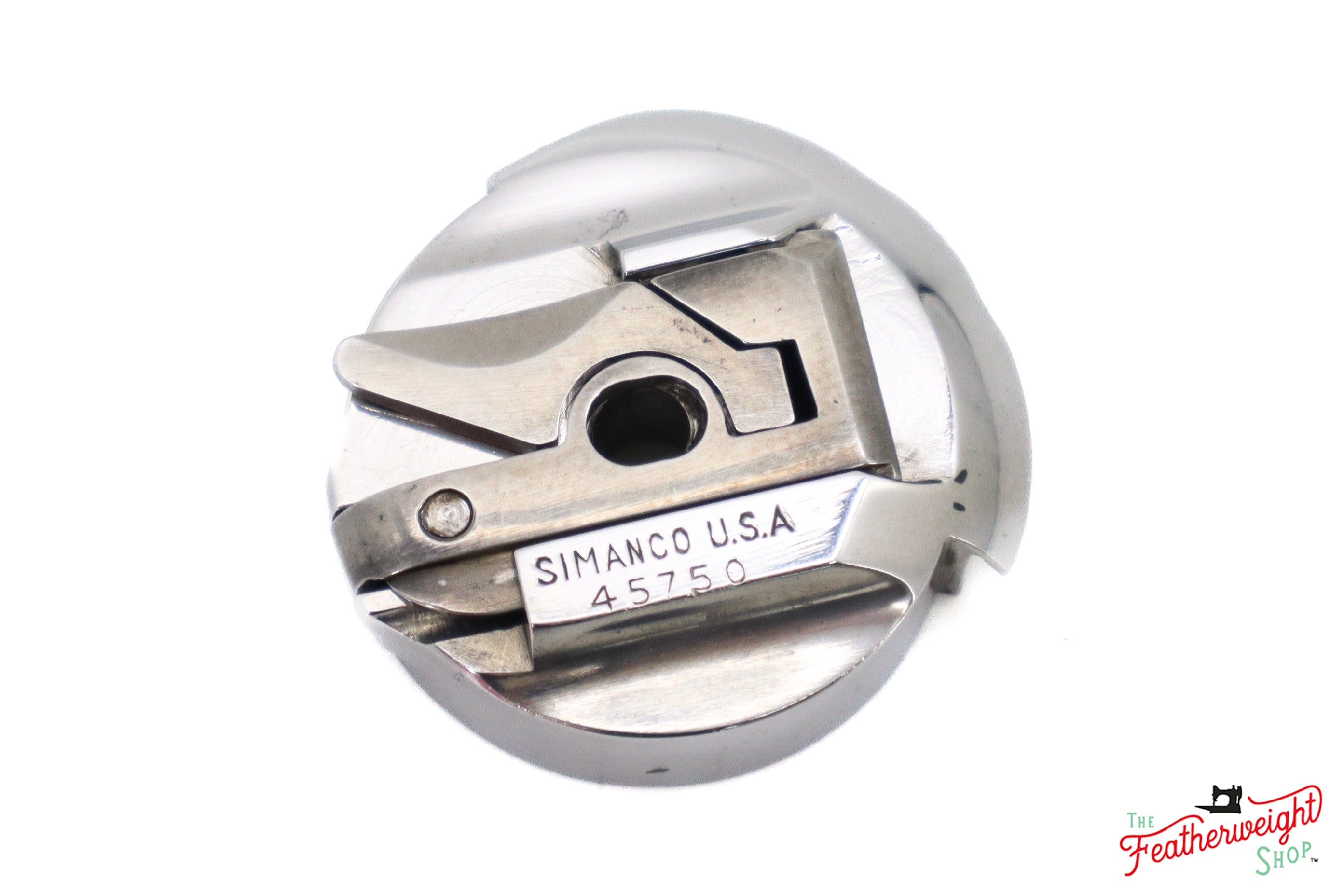
Bobbin case/bases Q: Are there reproduction bobbin cases up to Singer's original standard? A: Some are but some are, sadly, a long way from it. Those made in Japan are said to be the best. Be sure that your supplier actually tests the case before delivery and that you have a money-back guarantee before parting with your money. There's a list of suppliers who can be expected to test all cases in the Parts supply section of this FAQ
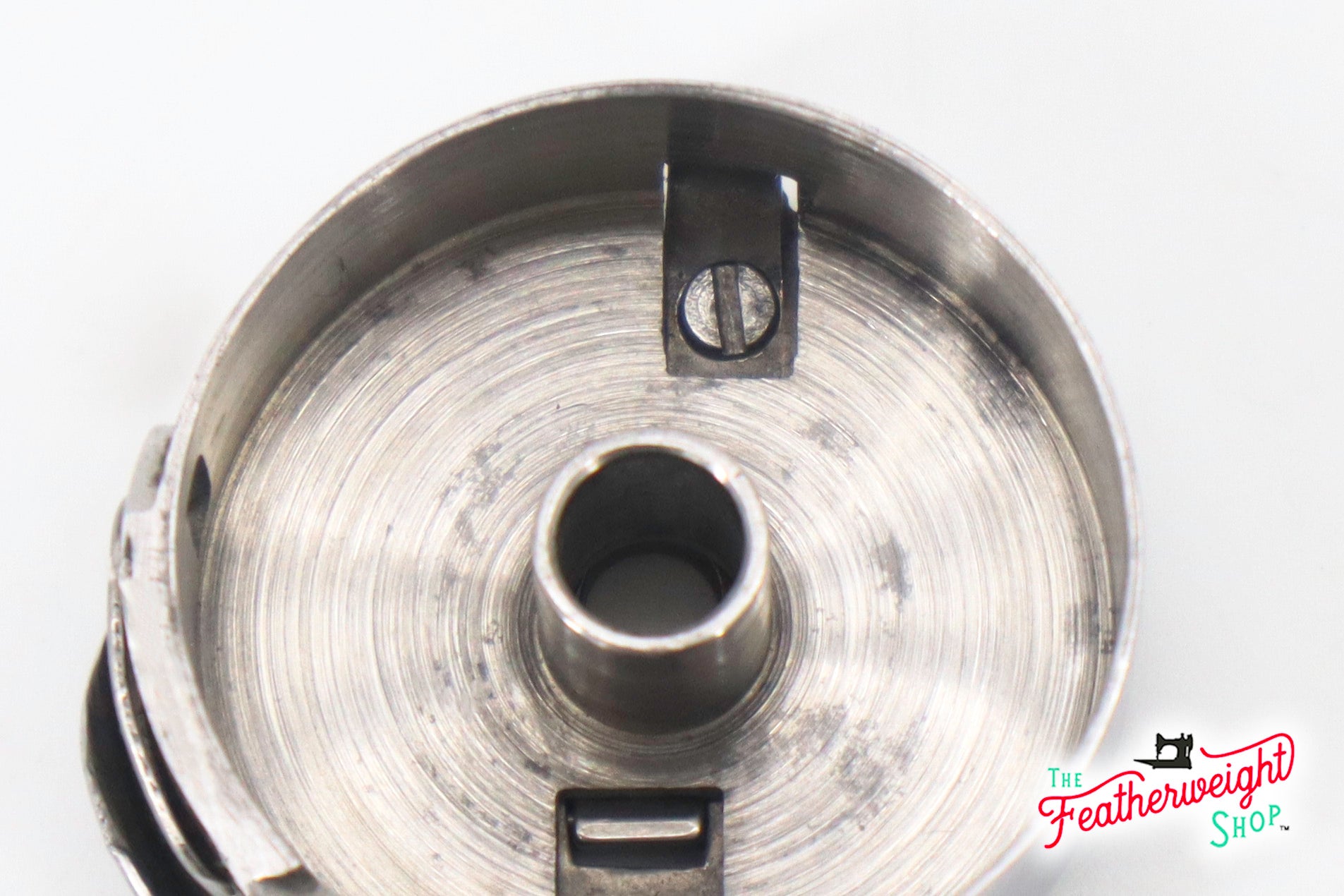
Q: On my bobbin base I've broken the little tongue that locates under the throat plate. Can it be welded back on? A: Well, yes, but the process would distort and destroy the hardening of the base and it would be virually useless
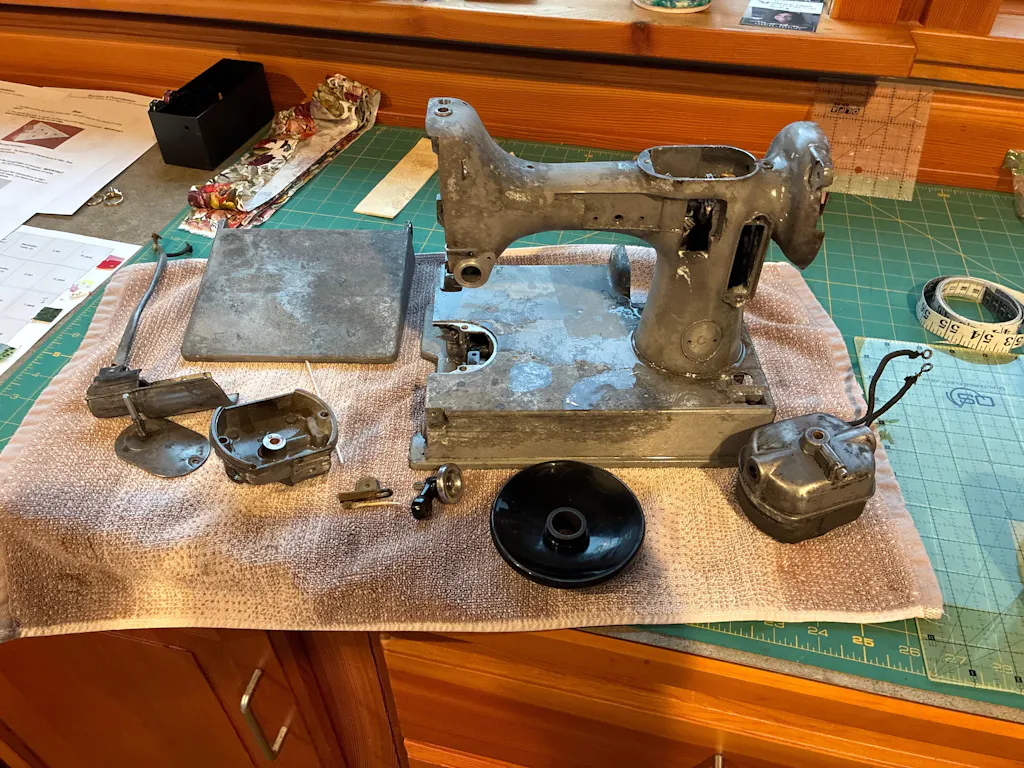
Q: The handbook gives instructions for removing the bobbin base but I find it very difficult. Any suggestions? A: The book suggests setting the machine with the gib screw at around 5 0'clock before removing it , pivoting the gib to one side and taking out the base. If only it was always that simple. I find it much easier to remove the throat plate so that I can set the machine in a position where there is more room to swing the gib
Q: How can I avoid stuck bobbin threads? A: From Linda in Modesto, CA. One trick into removing stuck bobbin threads is, first of all, to be sure the thread is out of the needle, grab hold of the stuck thread with tweezers and move the balance wheel BACKWARDS and forwards, etc. Remember that the thread probably got stuck while the machine was stitching forwards so by turning it backwards should help loosen up things.......hopefully. In my FW maintenance class I show my students how to prevent threads from getting stuck in the first place. When you begin to sew, be sure to hold tightly to the bobbin and top thread tales until the tension is established after one or two stitches. Then when you finish stitching, move the balance wheel FORWARD till the take up lever is at its highest point before pulling the fabric away from the needle to cut the thread. These two procedures should prevent tangles in the future. They are also helpful when sewing on other machines as well.
Q: I live in humid Florida and I notice that the bobbin case area is becoming rusty. How can I stop this happening? A: Clearly one should store the machine as much out of the weather as possible - garage storage is not a good idea. I suggest you also obtain some silica gel, perhaps from the pharmacy. These granules absorb moisture. Put a couple of spoonfuls in a linen bag in with the machine and change about once a month. It is possible to dry out the "damp" gel in an oven but it's so cheap it's hardly worthwhile.
|
|||||||||||
|
Featherweight
History Machine
Dating Condition
Chart Accessories
Parts lists/numbers
Owners'
Manuals Workshop
Manuals Featherweight
Facts and Myths Freearm
Applications Advertising
Art Work Cleaning
Your Machine |
|||||||||||
|
Standard Machines 1951 Centennials White/Green Models Freearm 222s Featherweight Toys Spare Parts Sales Accessory Sales Our Guarantee Repairs/Servicing Motor rebuilds and voltage conversions What our customers say Lay-away plan |
|||||||||||