
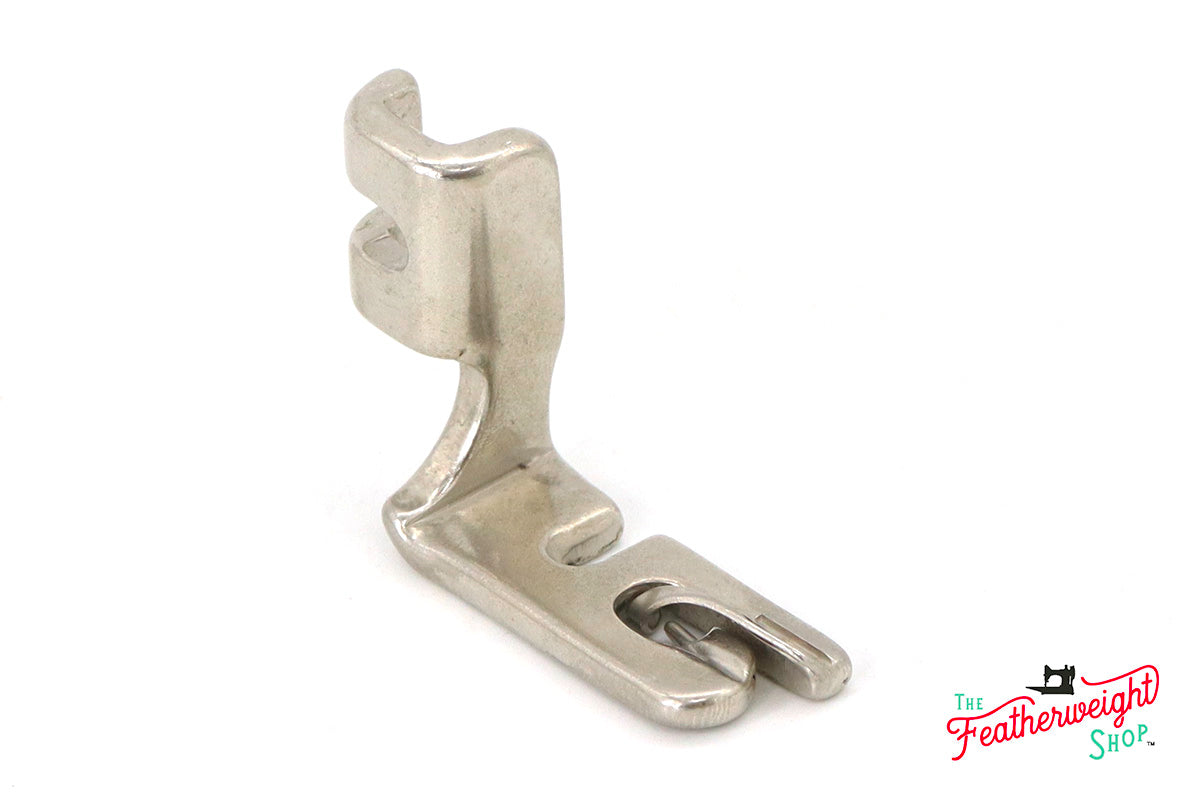



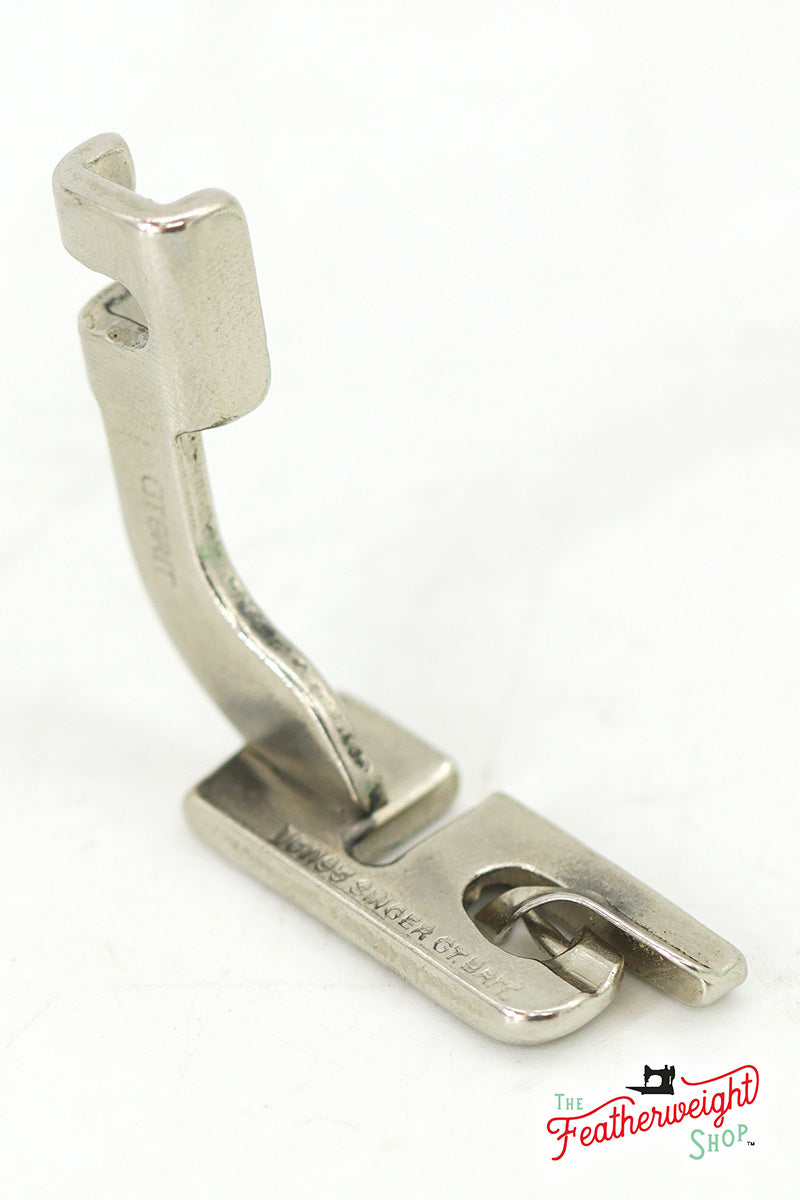
Narrow Rolled Hemmer, 1/8 inch Singer (Vintage Original)
This item will earn you at least 19 POINTS in Sewciety Rewards.
NEW! VIDEO TUTORIAL!
The Foot Hemmer was originally included as part of the Standard Set of Singer Attachments.
As with all attachments ~ this one will take time and practice to perfect.
Click here for instructions on how to use the Narrow Hemmer.
LOW SHANK: fits the Singer Featherweight 221, 222K and all low, vertical shank Sewing Machines (i.e. 15, 27, 28, 66, 99, 185, 127, 128, 192, 201, 206, 237, 306, 319, 320, 328, as well as many other brands besides Singer)
SLANT SHANK: fits all SLANT shank Singer Sewing Machines (i.e. 301, 301A, 401, 401A, 403, 500, 503, 600 & 700 Series and all other Slant Needle Singer Models)
The Foot Hemmer was originally included as part of the Standard Set of Singer Attachments.
Narrow Rolled Hemmer, 1/8 inch Singer (Vintage Original)
Sale price$ 19.95
Regular price
Quick View
Narrow Rolled Hemmer, 1/8 inch Singer (Vintage Original)
Sale price$ 19.95
Regular price